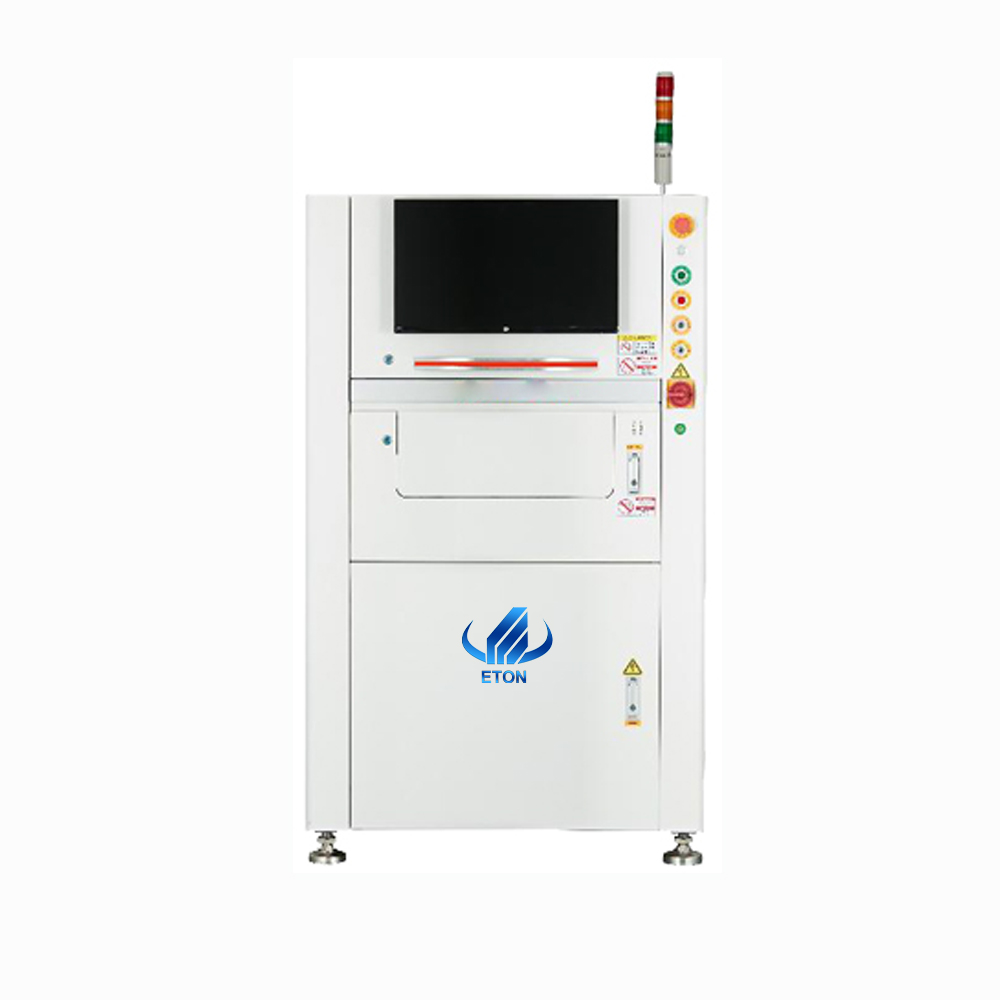
|
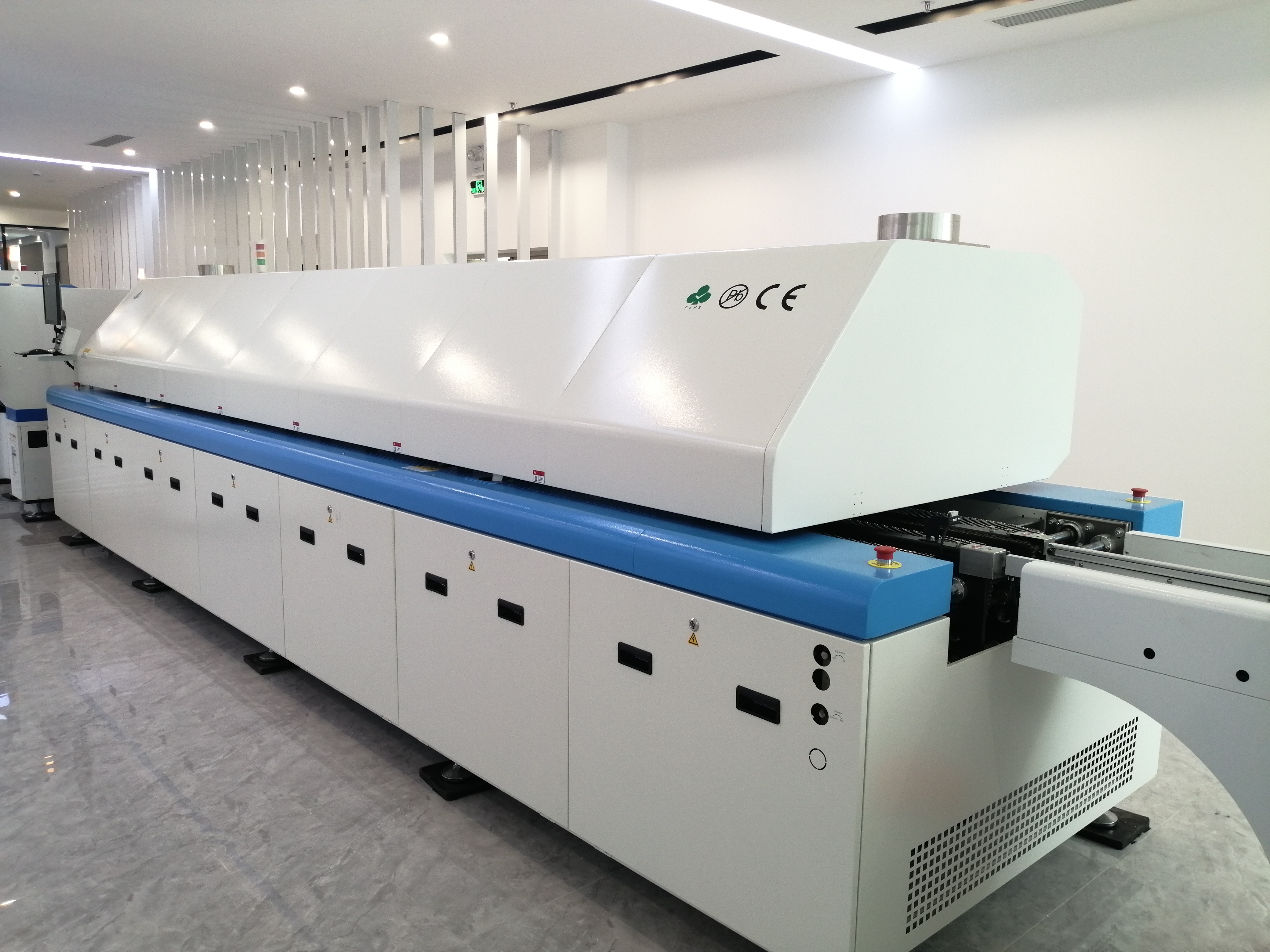
In modern electronics manufacturing, we marvel at how the densely packed components on a PCB (Printed Circuit Board) are accurately and firmly connected to form a powerful, functional whole. The core of this connection process is what we will delve into today: Reflow Soldering. It acts like a precise "magic furnace," using carefully controlled heat to transform solid solder paste into liquid, which then cools and solidifies, creating a permanent electrical and mechanical connection between the components and the PCB. This article will take you from the basics to an in-depth understanding, providing a comprehensive analysis of all aspects of reflow soldering.
I. What is Reflow Soldering? Why is it Indispensable?Reflow soldering, also known as reflow, is the key process in SMT (Surface Mount Technology) production. Its core principle can be summarized simply: Solder paste is first printed onto the PCB pads. Then, a pick-and-place machine accurately positions surface-mount components onto the solder paste. Finally, the PCB carrying the components is conveyed through a reflow oven, undergoing a predefined temperature profile. During this process, the solder paste heats up, melts (reflows), wets the component leads and PCB pads, and subsequently cools and solidifies, forming reliable electrical and mechanical connections. Compared to traditional wave soldering (primarily for through-hole components), the advantages of reflow soldering include:
It's fair to say that without reflow soldering technology, we would not have the highly integrated modern electronic products we see today, such as smartphones, tablets, wearables, and more. II. Core Elements of Reflow Soldering: Solder Paste and Temperature ProfileTo understand reflow soldering, one must master its two most critical elements: Solder Paste and the Temperature Profile. These are the keys to determining soldering quality success or failure.
Solder paste is not simply a metal powder; it's a meticulously formulated mixture of several components, including: Alloy Solder Powder (85-92%): This forms the main body of the solder joint. The most common lead-free alloy is SAC305 (Tin Sn96.5% / Silver Ag3.0% / Copper Cu0.5%). The alloy composition and the powder's particle shape and size distribution directly affect its melting temperature and soldering performance. Flux (8-15%): This is the "magic potion" within the solder paste, playing vital roles during the soldering process:
Solvents and Thixotropic Agents: These components determine the solder paste's printing performance. They allow the paste to remain viscous at rest but become less viscous (thinner) under the shear force of the squeegee, enabling it to pass through stencil apertures easily. After printing, it recovers its viscosity to hold components in place. The selection of solder paste (e.g., alloy type, particle size, halide content, viscosity) requires comprehensive consideration based on product requirements (e.g., reliability, conductivity), component types, and process capabilities.
If solder paste is the soul, then the temperature profile is the "lifeline" guiding this soul to fulfill its mission. It describes the trajectory of temperature over time for a specific point on the PCB as it passes through the reflow oven. An optimized temperature profile is the fundamental guarantee for achieving a high yield of acceptable solder joints. A standard reflow temperature profile typically consists of four core stages: a) Preheating Zone Goal: To raise the PCB and components uniformly and gradually from room temperature to the activation temperature. Process: A typical heating rate is 1-3°C per second. Too fast a rate can cause violent solvent evaporation from the paste, leading to "solder ball" splatter; it can also cause thermal shock to components. Too slow a rate may cause the flux to evaporate and become ineffective prematurely. b) Soak Zone / Thermal Stabilization Zone Goal: To evaporate solvents from the solder paste; to fully activate the flux, removing oxides from the surfaces to be soldered; to allow temperatures across the PCB for components of different sizes and masses to equalize, minimizing thermal differentials. Process: The temperature is typically maintained between 150-190°C (for SAC305 alloy) for 60-120 seconds. This stage is critical for the flux to perform its function. Insufficient time leads to inadequate oxide removal and poor wetting. Excessive time causes the flux to be completely consumed, losing its protective effect and leading to re-oxidation during soldering. c) Reflow Zone / Soldering Zone Goal: To heat the solder paste above its melting point, causing it to completely liquefy, wet, and spread across the component leads and PCB pads, forming intermetallic compounds (IMCs) and achieving a metallurgical bond. Process: This is the peak of the entire process. The peak temperature is typically 20-40°C above the liquidus temperature of the solder alloy. For SAC305 (liquidus ~217°C), the peak temperature is generally set between 235-245°C. The maximum temperature endured by the component body should be below its thermal limit (usually specified in the component datasheet). The time spent in this zone above the liquidus temperature (TAL) is crucial and is typically recommended to be between 45-90 seconds. Too short a time results in insufficient IMC formation and weak solder joints. Too long a time can lead to PCB delamination, component damage, or dull, grainy-looking solder joints.
Goal: To control the solidification process of the solder joint from liquid to solid, forming a stable solder joint with a fine microstructure. Process: The cooling rate must be carefully controlled. An appropriate cooling rate (e.g., 2-4°C per second) helps form bright solder joint surfaces and fine grain structures, thereby improving the mechanical strength and fatigue resistance of the joint. Cooling too slowly leads to coarse grains and reduced strength. Cooling too quickly can cause component cracking or solder joint cracks due to thermal stress.
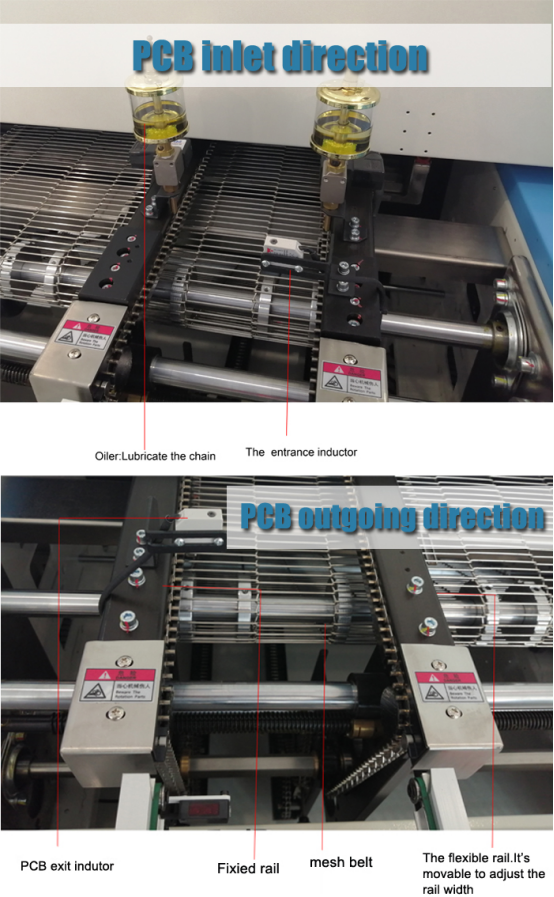
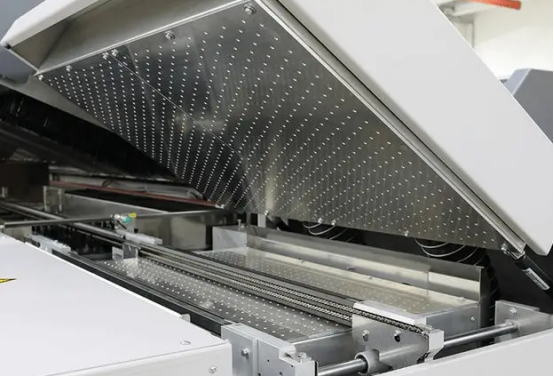
How to Obtain and Optimize the Temperature Profile? III. The Evolution and Technical Details of Reflow EquipmentThe reflow oven is the hardware foundation for achieving the temperature profile, and its technology is continuously advancing. Heating Methods:
Nitrogen Atmosphere: Number of Zones: IV. Analysis of Common Reflow Defects and SolutionsEven with a mature process, defects can occur. Rapidly identifying and resolving defects is an essential skill for engineers. 1.Tombstoning / Manhattan Effect: Phenomenon: A chip component stands up on one end, resembling a tombstone. Causes: Uneven timing of solder paste melting between the two ends (wetting force imbalance); one pad being too large or solder paste misprinted; differences in solderability between the component itself or the pads. Countermeasures: Optimize stencil aperture design to ensure equal solder paste volume on both pads; optimize the temperature profile to ensure simultaneous melting; check the solderability of the pads. 2.Solder Balls: Phenomenon: Tiny spheres of solder scattered around the solder joint. Causes: Too rapid heating in the preheat zone causing solvent boiling and splattering of solder powder; solder paste moisture absorption; improper stencil aperture design or printing parameters. Countermeasures: Reduce the preheat zone slope; ensure proper solder paste handling (warming, usage); optimize stencil design and cleaning frequency. 3.Solder Bridging / Shorting: Phenomenon: Adjacent solder joints or pins are connected by excess solder, causing a short circuit. Causes: Excessive solder paste volume (incorrect stencil thickness or aperture design); excessive component placement pressure causing paste slump; insufficient pad-to-pad spacing in design;不合理 temperature profile. Countermeasures: Optimize stencil design (e.g., nano-coatings, reducing aperture area); adjust pick-and-place machine Z-axis height; review PCB design; adjust reflow profile, potentially increasing soak time to improve flux activity. 4.Cold Solder Joint: Phenomenon: The solder joint surface appears rough, dull, and the connection is weak. Causes: Insufficient peak temperature or too short a time above liquidus, preventing complete melting or adequate metallurgical reaction; severe oxidation of components or PCB. Countermeasures: Increase peak temperature or extend time above liquidus; check the solderability and storage conditions of materials. 5.Voids in BGA Solder Joints: Phenomenon: Black holes visible inside BGA solder joints under X-Ray inspection. Causes: Volatiles from the solder paste trapped and unable to escape before the solder solidifies; moisture within the PCB or component; poor pad or stencil aperture design. Countermeasures: Optimize temperature profile (extend soak time); bake PCBs and BGAs to remove moisture; optimize stencil aperture design (often using grid or home-plate patterns).
V. Future Trends and ChallengesReflow soldering technology continues to evolve, facing new challenges and opportunities: Miniaturization and High Density: As component sizes continue to shrink (01005, 008004) and pitches become denser, demands on solder paste printing accuracy, paste performance, and temperature uniformity are pushed to the extreme. Application of New Materials: To meet high-frequency and high-speed application needs, new substrate materials like LTCC and special plastics are emerging, requiring re-evaluation and matching of their CTE with soldering temperatures. Power Electronics and Thermal Management: In areas like electric vehicles and renewable energy, soldering high-power components may require new connection materials like sintered silver, whose process integration with reflow is a key research focus. AI and Smart Manufacturing: Utilizing AI and big data for real-time monitoring and predictive maintenance of the reflow process, using machine learning to auto-optimize temperature profiles, and achieving "zero-defect" manufacturing are future directions.
ConclusionReflow soldering, a process that might seem like mere "heating and cooling," actually contains profound knowledge of materials science, thermodynamics, fluid mechanics, and precision control. It is the bridge connecting design and reality, chips and systems. Every time a smartphone powers on, every response from a smart device, relies on countless reliable solder joints created by the reflow soldering process. Deeply understanding and continuously optimizing the reflow soldering process is the cornerstone driving the electronics manufacturing industry towards higher, more precise, and more advanced goals. May this blog post open the door to this "magic furnace" for you, revealing its endless mysteries and charm.
💡 Want to learn more about ETON’s SMT solutions? 📩 Contact us for cooperation and product details: Email: linda@eton-mounter.com WhatsApp/WeChat: +86 136 7019 7725 🚀 ETON Automation — Smart Manufacturing, Global Vision |
Unveiling the "Magic Furnace" of Electronics Manufacturing: A Comprehensive Guide to Reflow Soldering
25. nov 2025 eton