|
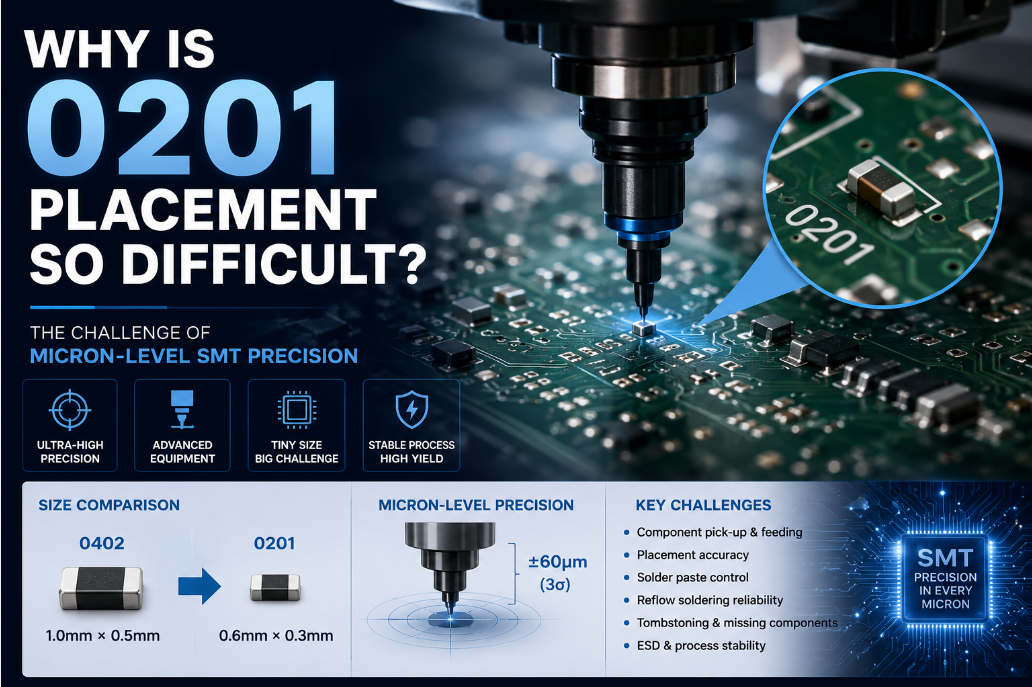
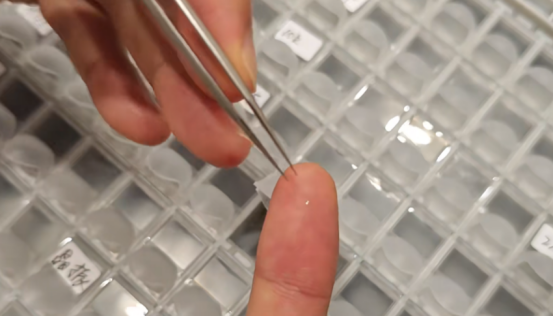
As consumer electronics, communication equipment, automotive electronics, wearable devices, and other products continue to become smaller, thinner, and more highly integrated, PCB components are following the same trend. From 1206 and 0805 to 0603, 0402, and now increasingly used 0201 components, electronics manufacturing is entering an era of higher-density assembly. A typical 0201 component measures only 0.6 mm × 0.3 mm. For a pick-and-place machine, moving from 0402 to 0201 is not simply about being able to place a smaller component. The real challenge is this:
So, where exactly do the challenges of 0201 placement come from?
1. Smaller Size Means Tighter Placement ToleranceThe most obvious characteristic of an 0201 component is its extremely small size. When a component measures just 0.6 × 0.3 mm, traditional approaches to placement tolerance control face much greater challenges. During placement, the component goes through a series of critical steps: Feeding → Pickup → Vision Recognition → Position Compensation → Movement → Placement Any deviation at one of these stages can eventually affect the final position of the component on the PCB. This becomes particularly important on high-density PCBs, where the spacing between components can also be extremely limited. As a result, 0201 placement requires more than just absolute positioning accuracy. It also requires:
In other words: Placing an 0201 component accurately once is not the real challenge. Maintaining that accuracy consistently is. 2. Pickup Becomes More Challenging: Nozzles and Vacuum Control MatterFor 0201 components, the placement challenge can begin even before the component reaches the PCB. Because the component is extremely small and lightweight, the effective contact area between the nozzle and the component is very limited. Issues such as:
can lead to pickup offset, pickup failure, or even component drop-off. Therefore, 0201 placement is not simply a test of the placement head. It is a test of the entire pickup system: Nozzle + Vacuum System + Feeder + Placement Head For ultra-small components, stable pickup is the first step toward stable placement. 3. Feeder Accuracy: An Often-Overlooked Variable
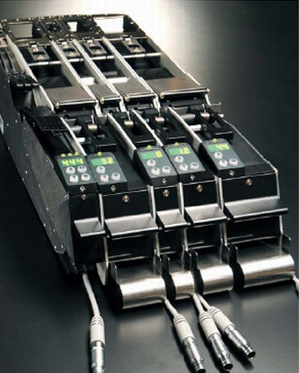
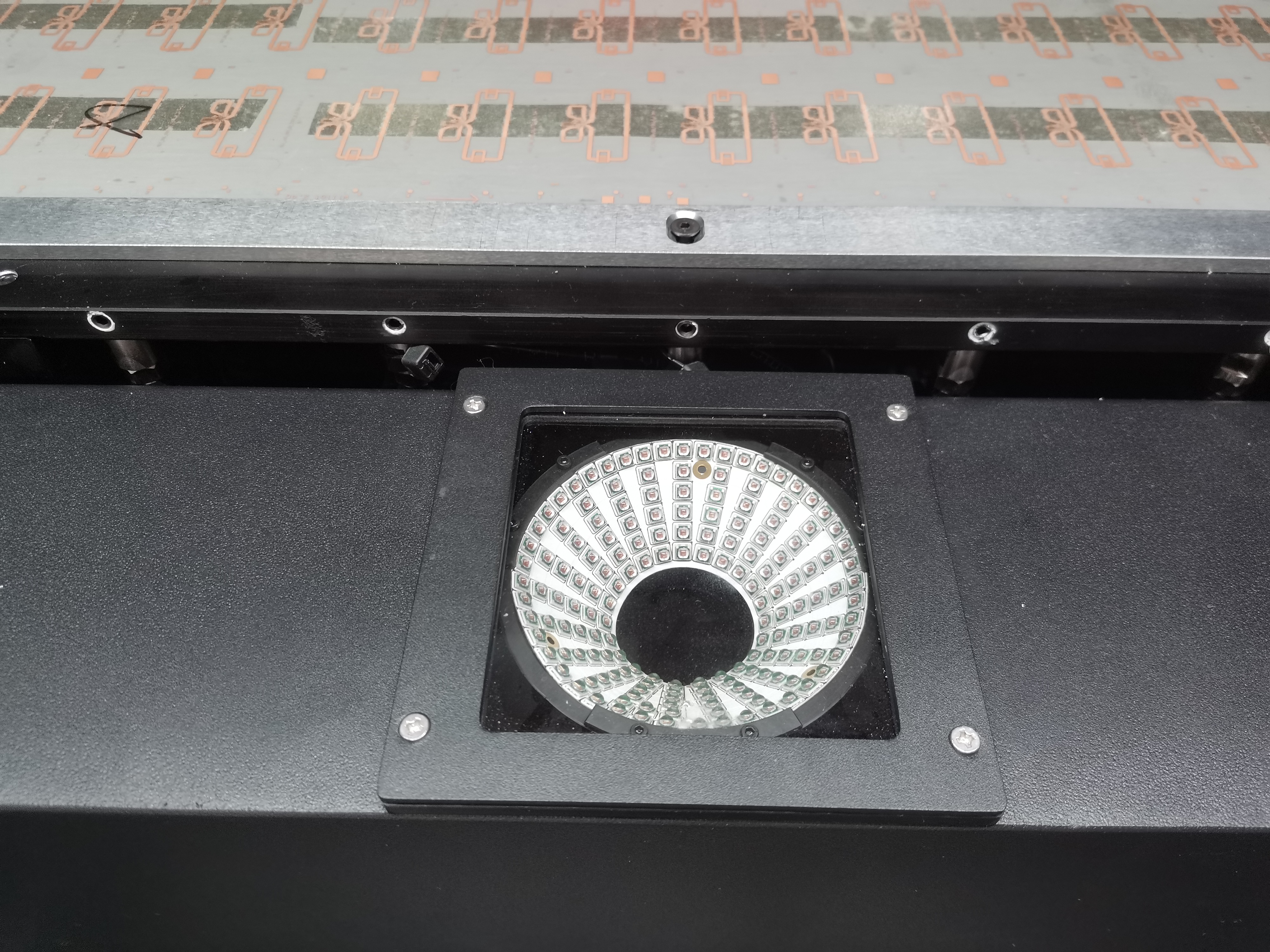
When discussing 0201 placement, most people naturally focus on the accuracy of the pick-and-place machine. But in reality, feeder stability is equally important. The machine must consistently obtain each component from the carrier tape. If the component arrives at the pickup position with even a small positional variation, it can directly affect the pickup condition. The process can be simplified as: Tape Feeding → Component Positioning → Pickup → Vision Recognition → Position Correction Any instability in this chain can increase placement deviation. Therefore, for ultra-small components such as 0201, equipment accuracy should not be evaluated based solely on the placement head. It should be considered as the overall system accuracy from component feeding to final placement. 4. Vision Recognition Becomes More CriticalAfter the component is picked up, the machine still needs to determine: Where is the component? This is where the vision system becomes critical. Because 0201 components are extremely small, the vision system needs to accurately identify their position and orientation from limited visual information and provide the necessary position compensation before placement. Therefore, 0201 placement is essentially the result of three key capabilities working together: Mechanical Motion Accuracy + Vision Recognition + Software Compensation Algorithms This is also why a single specification such as maximum placement speed cannot fully determine whether a pick-and-place machine is suitable for 0201 production.
5. High Speed and High Precision: Finding the Right Balance0201 placement presents another very practical production challenge: Can the machine maintain placement accuracy at high speed? For a single placement in a demonstration environment, achieving high accuracy may not be particularly difficult. Industrial production is completely different. Manufacturers need equipment that can maintain stable placement performance for hours, days, and extended production cycles. Therefore, the real value is not simply the machine's maximum placement speed. It is the ability to achieve: High Speed + High Accuracy + Repeatability + Long-Term Stability at the same time. For high-speed SMT equipment, finding the right balance between productivity and precision is therefore critical. 6. 0201 Placement Is Not Just a Machine ChallengeOne point deserves particular attention: 0201 placement is not only a pick-and-place machine issue. The entire SMT process can influence the final result. A typical process includes: PCB Design For example, even if a pick-and-place machine achieves highly accurate placement, issues such as solder paste offset, insufficient solder paste, or poor paste deposition can still result in soldering defects. Therefore, successful 0201 production requires: Equipment Precision + Process Stability + Overall Line Control rather than relying on a single machine specification. 7. What Does 0201 Placement Really Require from a Pick-and-Place Machine?From an equipment perspective, 0201 placement places several key requirements on a pick-and-place machine. 1. High Repeatable Positioning AccuracyThe machine needs to maintain stable positioning accuracy during continuous high-speed operation. 2. Stable Component PickupThe nozzle, vacuum system, and feeding system must work together reliably to reduce pickup errors when handling ultra-small components. 3. High-Precision Vision RecognitionThe vision system needs to accurately identify component position and orientation and provide reliable data for placement correction. 4. Stable Motion ControlDuring high-speed operation, the mechanical structure, drive system, and control algorithms must remain synchronized to prevent motion deviations from affecting final placement accuracy. 5. Software Compensation and AlgorithmsFor ultra-small components, mechanical precision is only the foundation. How the machine uses vision data, motion control, and software algorithms to compensate for positioning deviations is equally important to the final placement result. 8. How Does ETON Address the Challenges of 0201 Placement?
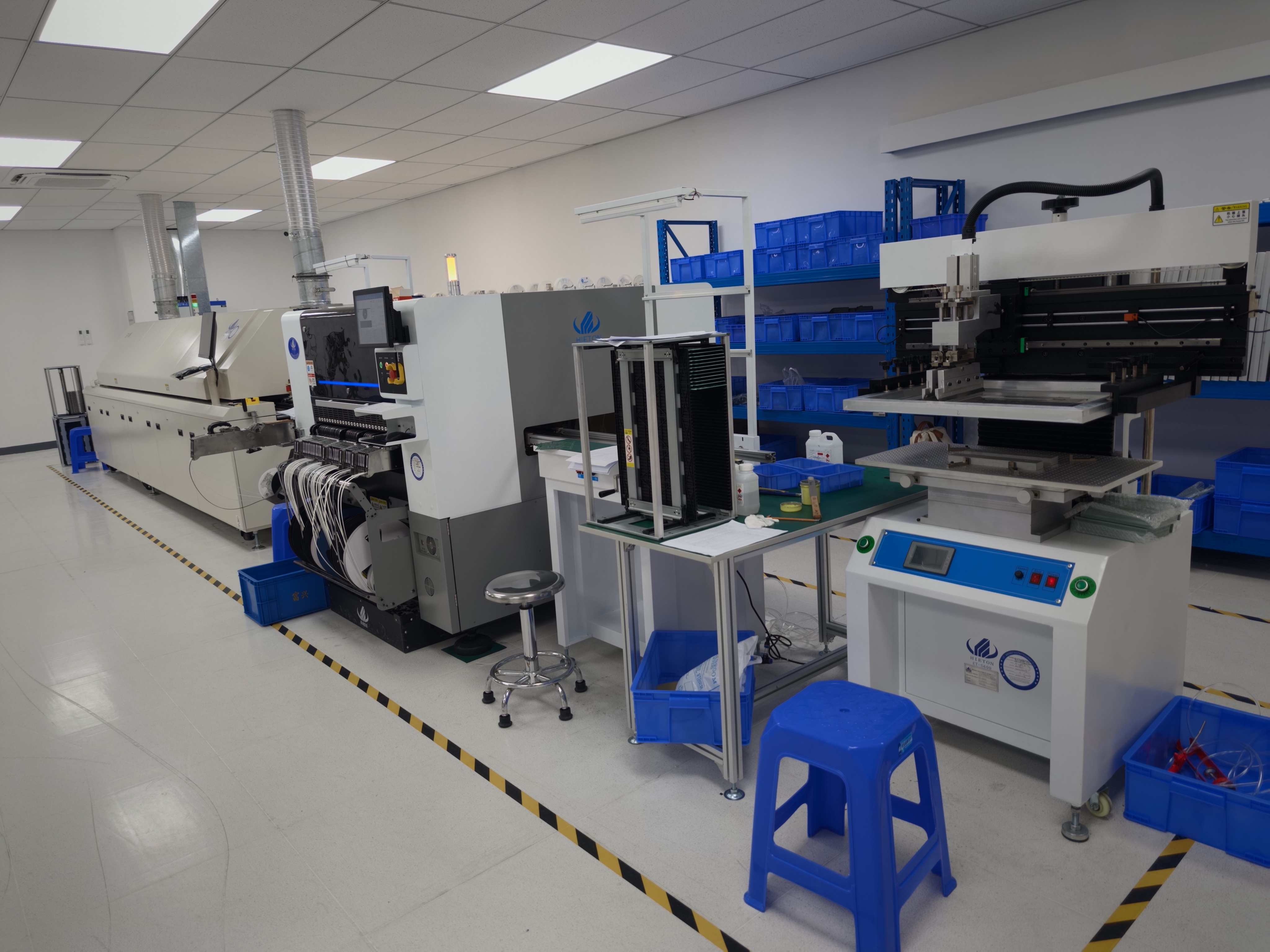
For ultra-small components such as 0201, ETON does not focus solely on achieving a higher speed specification. We place greater emphasis on: Precision × Stability × Repeatability From component pickup and vision recognition to motion control and final placement, every stage needs to work together consistently. ETON pick-and-place machines integrate high-precision motion control, vision-based positioning and correction, stable component feeding, and coordinated placement control to provide a reliable equipment foundation for ultra-small component assembly. For real-world production, the question we focus on is not simply: “Can the machine place 0201?” It is: “Can it place 0201 consistently and reliably throughout continuous production?” That is the key difference between demonstrating a capability and delivering a solution for mass production. From 0402 to 0201: SMT Is Moving Toward Higher-Precision ManufacturingComponent miniaturization is continuing. For electronics manufacturers, future competitiveness will depend not only on who has the faster machine, but increasingly on who can achieve the right balance between: Smaller Components + Higher PCB Density + Higher Production Efficiency 0201 is just one example of this ongoing miniaturization trend. As components become smaller, the challenges facing SMT equipment become increasingly complex. Smaller components require higher precision. ETON | Precision in Every Placement. |
0201 Component Placement Challenges: From Miniaturization to High-Precision SMT Manufacturing
2026년 8월 19일 ETON