|
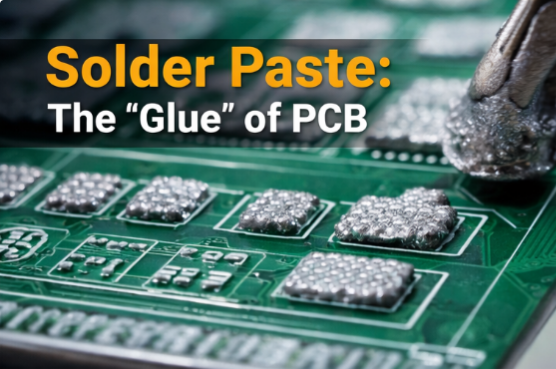
In SMT manufacturing, there is one material that quietly determines the success or failure of a circuit board — solder paste. It connects, conducts, and completes the circuit. What Is Solder Paste?Solder paste is a mixture of solder alloy powder and flux. At room temperature, it looks like grey paste. Without solder paste, there would be no electrical connection on a surface mount board. Why Is It Called the “Glue” of PCB?Before reflow soldering, solder paste acts like glue by temporarily holding components in position after placement. However, unlike glue, solder paste also:
So it is not just glue — it is the foundation of every solder joint. The Role of Solder Paste in SMT ProcessIn a typical SMT production line, solder paste is involved in several key stages:
If there is a problem with solder paste printing, the entire process can fail, even if all other machines are working perfectly. Common Problems Caused by Poor Solder Paste PrintingMany SMT defects actually originate from solder paste issues, such as:
This is why many engineers say: What Determines Good Solder Paste Printing?Several factors affect solder paste quality:
Controlling these factors is essential for stable SMT production. Final ThoughtsSolder paste may be one of the smallest materials in the SMT process, but its impact is enormous. You can have the fastest pick and place machine and the most advanced reflow oven, but if the solder paste printing is not correct, defects will still occur. That is why in SMT manufacturing, solder paste is often called: The glue of the PCB — and the foundation of SMT quality.
|
Solder Paste: The Glue of PCB
27 mar. 2026 HIETON