Industry
-
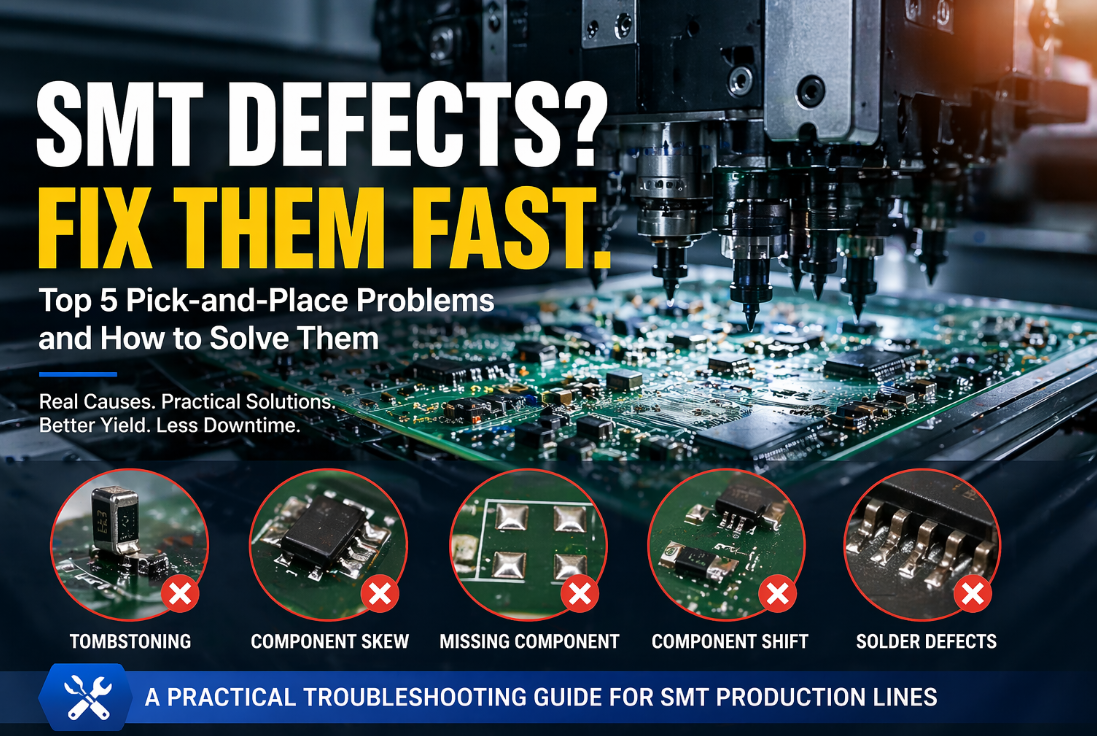
This article provides a systematic, practical guide to diagnosing and resolving the most common pick-and-place-related defects. Based on real-world case studies from contract manufacturers and high-volume lines, we will walk through each defect type, its probable causes, and step-by-step corrective actions. By the end, you will have a troubleshooting framework that reduces downtime and improves first-pass yield.
-
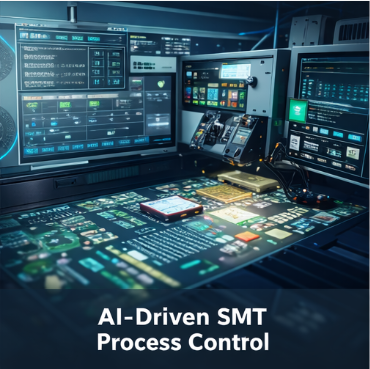
The future of SMT assembly is shifting from reactive control to predictive and autonomous operation. By combining AI-driven process optimization, inline 3D inspection (SPI & AOI), and closed-loop control, modern pick-and-place lines can detect, predict, and correct issues in real time. This not only reduces defects and downtime but also enables the transition toward fully autonomous, “lights-out” SMT production.
-
-4.png?w=536&h=769)
Beyond the Basics – Advanced Feeder Technologies & Smart Line Optimization for High-Mix SMT Assembly
In modern SMT manufacturing, the key challenge is no longer placement speed, but flexibility. With high-mix, low-to-medium volume (HMLV) production becoming standard, frequent changeovers and diverse components put pressure on efficiency and quality. The main bottleneck lies in feeder systems and line management, not the placement machine itself. By adopting advanced feeder technologies and smart line optimization strategies, manufacturers can significantly improve overall equipment effectiveness (OEE).